
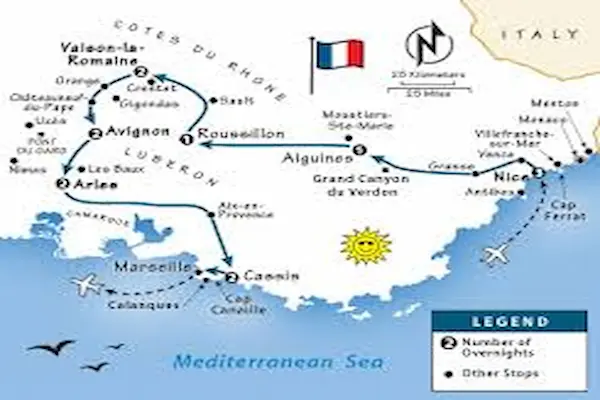
Planning a trip through the south of France often begins with a feeling of fascination, because the region is associated with sunlit landscapes, historic towns, colorful markets, coastal views, and a slower rhythm of life that feels deeply inviting to travelers seeking beauty and charm.
For many visitors, the challenge is not whether the south of France is worth exploring, but how to organize a journey that feels coherent and relaxed, rather than rushed and fragmented, especially when there are so many appealing regions and villages spread across the area.
This south of France itinerary was designed to inspire travelers who dream of Mediterranean light, Provençal villages, and scenic routes, while also offering a logical order of visits that balances distance, variety, and travel time.
Throughout this guide, you will discover key regions, notable cities, charming villages, and a suggested flow for moving through the south of France in a way that allows landscapes and local atmosphere to unfold naturally.
The objective is not to see everything in one trip, but to help you build a journey that feels harmonious, memorable, and aligned with the desire for scenery, culture, and unhurried exploration.
Understanding the South of France as a Travel Region
The south of France is not a single destination, but a collection of regions with distinct identities, landscapes, and cultural influences, ranging from the Mediterranean coastline to inland countryside and historic river valleys.
Recognizing these regional differences helps travelers design an itinerary that flows logically and avoids unnecessary backtracking.
Main Areas Commonly Included in a South of France Trip
- The French Riviera along the Mediterranean coast.
- Provence with its villages and countryside.
- Historic towns connected by rivers and trade routes.
- Natural parks and scenic inland areas.
Each area contributes a different atmosphere.
Why Start With the French Riviera
Many travelers choose to begin their south of France itinerary along the coast, because the French Riviera offers a gentle introduction with easy transportation, iconic scenery, and a relaxed yet vibrant Mediterranean feel.
Starting by the sea allows visitors to ease into the rhythm of the region before heading inland.
A Natural Gateway
Nice is often considered the gateway to the French Riviera, combining a lively urban atmosphere with immediate access to the sea, historic districts, and surrounding hills.
The city works well as both a base and a destination in its own right, especially for travelers experiencing the south of France for the first time.
Why Nice Works Well at the Start of the Itinerary
- Good transport connections.
- Mix of beach, culture, and city life.
- Walkable historic center.
Spending two or three days in Nice allows time to adjust and explore comfortably.
Exploring the French Riviera Beyond Nice
The French Riviera is not limited to a single city, and its charm often reveals itself through short trips to nearby coastal towns and villages.
Types of Places to Explore Along the Riviera
- Elegant seaside towns.
- Hilltop villages overlooking the coast.
- Small harbors and quiet beaches.
Day trips add variety without changing accommodation.
Coastal Character and History
Antibes offers a balance between historic charm and seaside relaxation, making it a pleasant stop or day trip during a Riviera-focused portion of the itinerary.
The town feels more intimate than larger cities, yet still lively.
What Makes Antibes Appealing
- Historic old town.
- Scenic coastal walks.
- Relaxed pace.
This stop fits well between larger destinations.
A Softer Riviera Experience
Menton sits near the Italian border and offers a softer, more pastel-colored Riviera experience, with gardens, gentle beaches, and a calm atmosphere.
This town appeals to travelers looking for beauty without the intensity of busier resorts.
Transitioning Inland Toward Provence
After experiencing the Mediterranean coast, many travelers move inland toward Provence, where landscapes shift dramatically and the pace slows.
This transition marks a change from seaside energy to rural charm.
Elegance and Daily Life
Aix-en-Provence is often chosen as a first stop in Provence because it combines refined architecture, a strong café culture, and a lively local population.
The city feels elegant yet approachable, making it an excellent introduction to the region.
Why Include Aix-en-Provence
- Beautiful historic center.
- Markets and fountains.
- Easy access to surrounding countryside.
Aix works well for two nights.
Understanding the Appeal of Provence
Provence is defined less by individual landmarks and more by atmosphere, landscape, and everyday traditions, which makes slower travel especially rewarding.
Villages, markets, and countryside views become the highlights.
Villages and Scenery
The Luberon region is one of the most iconic parts of Provence, known for its hilltop villages, vineyards, and changing colors across the seasons.
This area is ideal for travelers seeking picturesque landscapes and small-town charm.
Why the Luberon Is Central to a Provence Trip
- Concentration of charming villages.
- Scenic drives.
- Peaceful rural atmosphere.
Staying nearby allows unhurried exploration.
Stone Village Icon
Gordes is often considered one of the most visually striking villages in Provence, with stone houses cascading down a hillside.
Visiting Gordes offers an immediate sense of the region’s architectural identity.
Color and Contrast
Roussillon stands out for its warm ochre tones, which contrast beautifully with surrounding greenery and create a unique visual experience.
This village adds color and variety to a Provence itinerary.
Markets and Everyday Provence
Markets are an essential part of experiencing Provence, offering insight into local food, routines, and social life.
What to Expect at Provençal Markets
- Fresh produce.
- Local cheeses and breads.
- Crafts and regional specialties.
Markets reveal the region’s rhythm.
History and Architecture
Avignon offers a different side of Provence, focused on history, architecture, and its role as a former center of religious power.
The city provides a stronger urban contrast to village life.
Why Avignon Fits the Itinerary
- Historic significance.
- Well-preserved old town.
- Good base for nearby excursions.
One or two days usually suffice.
Natural Landscapes and Slower Moments
Beyond villages and cities, the south of France rewards travelers who allow time for nature, walks, and unplanned stops.
Types of Natural Experiences
- Scenic viewpoints.
- Short countryside walks.
- Quiet picnic spots.
Nature balances cultural visits.
Energy and the Sea
Marseille adds energy and contrast to a south of France itinerary, combining urban life with immediate access to dramatic coastal landscapes.
This city suits travelers who appreciate diversity and authenticity.
Why Include Marseille Toward the End
- Strong Mediterranean character.
- Access to coastal nature.
- Lively city atmosphere.
Marseille feels dynamic and real.
Logical Order for Visiting the South of France
Organizing the route carefully helps minimize travel time and maximize enjoyment.
Suggested Order of Visit
- French Riviera starting in Nice.
- Inland to Aix-en-Provence.
- Luberon villages.
- Avignon.
- Marseille.
This sequence flows naturally.
How Much Time to Allocate
Time allocation depends on travel style, but slower pacing usually enhances the experience.
General Time Guidelines
- French Riviera: 3 to 4 days.
- Provence and villages: 4 to 6 days.
- Marseille area: 2 days.
Adjust based on interests.
Transportation Considerations
Transportation choices influence flexibility.
Common Options
- Trains for city-to-city travel.
- Car rental for village exploration.
Combining options often works best.
Best Travel Style for the South of France
The region favors travelers who enjoy observation, spontaneity, and scenery over fast-paced sightseeing.
Ideal Travel Mindset
- Allow time for detours.
- Embrace slower meals.
- Value atmosphere as much as landmarks.
This mindset enhances enjoyment.
Common Mistakes to Avoid
Trying to Cover Too Much Ground
Distances add up quickly.
Skipping Villages Entirely
They define Provence’s charm.
Overplanning Every Hour
Flexibility reveals surprises.
Simple Planning Checklist for a South of France Trip
Before the Trip
- Choose main regions.
- Decide travel pace.
During the Trip
- Balance cities and countryside.
- Adjust plans as needed.
After Each Stop
- Reflect on pace and energy.
Reflection improves flow.
Frequently Asked Questions About a South of France Itinerary
Is the south of France suitable for first-time visitors?
Yes, with thoughtful planning.
Is a car necessary?
It helps for villages, but cities are accessible by train.
When is the best season?
Spring and early autumn balance weather and crowds.
Final Thoughts: Letting the South of France Unfold
Following a thoughtfully designed south of France itinerary allows landscapes, villages, and coastal views to reveal themselves gradually, creating a journey that feels inspiring rather than exhausting.
When you combine Mediterranean cities with Provençal countryside and allow enough time for unplanned moments, the south of France becomes not just a destination, but an experience defined by light, rhythm, and charm.
Which part of this itinerary resonates most with your idea of travel, and how might you adjust the route to match your own pace and sense of curiosity?