
Understanding the required documents to travel to France is one of the most important steps for any international traveler, because even a well-planned trip can be interrupted or canceled if documentation rules are not respected exactly as expected by immigration authorities.
Many travel problems do not happen because rules are complex, but because travelers rely on outdated information, assumptions based on other countries, or informal advice that does not reflect current entry requirements.
This guide was created to help international travelers clearly understand which travel documents are required to enter France, how those requirements vary depending on nationality and length of stay, and which additional documents are commonly requested during border control.
The objective of this article is straightforward: help you avoid legal issues, denied boarding, or entry refusal by preparing a complete and organized documentation set before departure.
Instead of focusing on one nationality only, this guide explains the logic behind the rules, making it easier for travelers from different countries to identify what applies to their specific situation.
Why Documentation Is Critical When Traveling to France
France applies entry rules that are aligned with European border standards, and those rules are enforced consistently at airports, land borders, and seaports.
Immigration officers do not evaluate travelers based on intention alone, but on the ability to prove eligibility to enter the country through valid documents.
Common Consequences of Missing or Incorrect Documents
- Denied boarding at the departure airport.
- Refusal of entry upon arrival.
- Forced return to the country of origin.
- Temporary travel bans in serious cases.
Proper preparation reduces stress and uncertainty.
Basic Documents Required to Travel to France
Regardless of nationality, there is a core set of documents that every traveler must have when entering France.
Essential Travel Documents
- Valid passport.
- Visa, if required.
- Proof of accommodation.
- Proof of sufficient funds.
- Return or onward ticket.
Each document serves a specific legal purpose.
Passport Requirements for France
A valid passport is the foundation of all international travel, and France applies specific validity rules that travelers must respect.
Passport Validity Rules
- Passport must be valid for at least three months beyond the planned departure date from France.
- Passport must have been issued within the last ten years.
- Passport must be in good physical condition.
Damaged or altered passports may be rejected.
Blank Pages and Condition
Although France does not specify a minimum number of blank pages, it is strongly recommended to have at least two blank pages available for entry and exit stamps.
Visa Requirements: Who Needs a Visa to Travel to France
Visa requirements depend primarily on the traveler’s nationality and the length and purpose of the stay.
France is part of the Schengen Area, which means visa rules are shared with several European countries.
Travelers Who Do Not Need a Short-Stay Visa
- Citizens of many countries with visa-free agreements.
- Short stays up to 90 days within a 180-day period.
- Tourism, business meetings, or family visits.
Visa-free does not mean document-free.
Travelers Who Need a Visa France Authorization
- Citizens of countries without visa-waiver agreements.
- Travelers staying longer than 90 days.
- Visitors planning to study, work, or reside.
Visa type must match the purpose of travel.
Understanding the 90/180 Rule
The 90/180 rule is one of the most misunderstood aspects of travel to France and other Schengen countries.
How the Rule Works
- You can stay up to 90 days.
- The count applies to any rolling 180-day period.
- Days spent in other Schengen countries count together.
Overstaying can result in fines or bans.
Proof of Accommodation
Immigration officers may request evidence that you have a place to stay during your visit to France.
Accepted Proof of Accommodation
- Hotel reservation confirmation.
- Rental agreement.
- Invitation letter from a host.
Accommodation details should match your travel dates.
Staying With Friends or Family
When staying with a private host, some travelers may need an official invitation document issued by local authorities, depending on nationality and length of stay.
Proof of Financial Means
France requires travelers to demonstrate that they can financially support themselves during their stay.
Examples of Accepted Financial Proof
- Recent bank statements.
- Credit cards.
- Cash within legal limits.
Amounts vary depending on accommodation arrangements.
Return or Onward Travel Ticket
A return or onward ticket proves that you intend to leave France within the allowed period.
Key Points About Travel Tickets
- Date must fall within permitted stay.
- Ticket should be confirmed, not tentative.
One-way tickets raise additional questions.
Travel Insurance Requirements
While not always requested, travel insurance is strongly recommended and may be mandatory for certain visa types.
What Travel Insurance Should Cover
- Medical emergencies.
- Hospitalization.
- Repatriation.
Insurance protects both traveler and host country systems.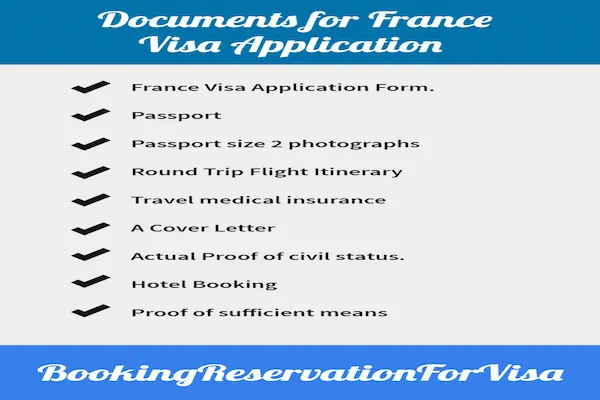
Additional Documents That May Be Requested
Border officers may request extra documents depending on circumstances.
Possible Additional Documents
- Employment verification letter.
- Student enrollment proof.
- Travel itinerary outline.
Preparation prevents delays.
Special Situations and Travelers
Minors Traveling to France
- Passport for the child.
- Parental authorization if applicable.
- Birth certificate copy.
Rules vary by country of origin.
Business Travelers
- Invitation from company.
- Proof of business purpose.
Students and Long-Term Visitors
Long-stay visas and residence permits require additional documentation and advance planning.
Documents to Travel Within France After Entry
Once inside France, travelers should still carry certain documents.
Documents to Keep Accessible
- Passport or copy.
- Accommodation details.
- Insurance information.
Random checks are possible.
Common Documentation Mistakes to Avoid
Expired or Near-Expiry Passports
Validity rules are strict.
Incorrect Visa Type
Purpose mismatch causes refusal.
Incomplete Supporting Documents
Missing proof raises suspicion.
Pre-Departure Document Checklist
Before Booking Flights
- Verify passport validity.
- Confirm visa requirements.
Before Departure
- Print accommodation confirmations.
- Prepare financial proof.
- Organize travel insurance.
Day of Travel
- Carry originals and copies.
- Keep documents easily accessible.
Frequently Asked Questions About Travel Documents for France
Do I need a visa to travel to France?
It depends on nationality and stay length.
Is a passport card accepted?
No, a passport booklet is required.
Can immigration ask additional questions?
Yes, documentation supports your answers.
Final Thoughts: Traveling to France With Confidence and Legal Security
Preparing the correct documents to travel to France is not about bureaucracy for its own sake, but about ensuring that your journey begins smoothly and without unnecessary stress.
When travelers understand visa France rules, passport requirements, and supporting travel documents, they gain control over the process and reduce the risk of unpleasant surprises at the airport.
By organizing documentation in advance and verifying requirements based on your personal situation, you can focus on enjoying the experience of France rather than worrying about entry formalities.
Have you already checked whether your passport and travel documents fully meet the current requirements for your trip to France?