
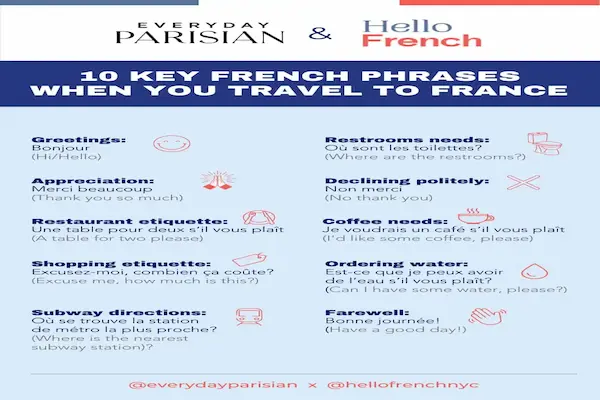
Learning basic French for travelers is not about becoming fluent or mastering complex grammar, but about gaining enough confidence to handle everyday situations politely, calmly, and respectfully, especially for visitors who do not speak French and may feel anxious about communication barriers.
For many tourists, language is the biggest source of insecurity when traveling to France, not because locals expect perfect French, but because visitors often fear being misunderstood, appearing rude, or feeling lost in simple moments like ordering food, asking for directions, or greeting someone properly.
This guide was created with an welcoming and supportive tone to help travelers approach the french language travel experience with curiosity rather than fear, offering essential phrases, cultural explanations, and practical context that make communication feel human and manageable.
The objective is simple and realistic: help you communicate basic needs, show politeness, and feel more at ease while traveling, even if French is completely new to you.
Why Learning Basic French Makes a Big Difference
Using even a few words of French can significantly improve interactions, because language in France is closely tied to respect, courtesy, and social awareness rather than technical fluency.
Many travelers discover that a small effort in French opens doors, softens conversations, and creates goodwill, even when the exchange quickly switches to another language.
Benefits of Knowing Basic French
- More positive reactions from locals.
- Less stress in daily situations.
- Greater cultural immersion.
- Increased travel confidence.
Effort matters more than perfection.
Understanding the Role of Politeness in French Language
Politeness is a central element of French communication, and many misunderstandings arise not from vocabulary errors, but from skipping polite expressions that are culturally expected.
Why Politeness Comes First
- Greetings establish respect.
- Courtesy signals good intentions.
- Social harmony is valued.
Starting politely sets the tone for everything that follows.
Essential Greetings Every Traveler Should Know
Greetings are not optional in French culture, especially when entering shops, restaurants, or starting conversations with strangers.
Basic Greetings
- Hello.
- Good morning.
- Good evening.
- Goodbye.
These words are used constantly.
When to Use Each Greeting
- Morning greetings before midday.
- Evening greetings later in the day.
- Goodbye when leaving a space.
Consistency shows awareness.
Polite Expressions That Make Conversations Easier
Polite expressions soften requests and are expected in most interactions.
Must-Know Polite Words
- Please.
- Thank you.
- You’re welcome.
- Excuse me.
These words are powerful social tools.
Why These Phrases Matter
Using polite language reassures the listener and makes communication feel respectful rather than demanding.
Introducing Yourself in Simple French
Introducing yourself does not require complex sentences, but simple structures that communicate who you are.
Basic Introduction Phrases
- My name is…
- I am from…
- I don’t speak French very well.
Honesty reduces pressure.
Asking for Help and Information
Travelers often need assistance, and knowing how to ask politely makes a significant difference.
Helpful Question Starters
- Can you help me?
- Do you speak English?
- Where is…?
Starting politely increases willingness to help.
French for Restaurants and Cafés
Eating out is one of the most common situations where basic French is useful.
Common Restaurant Phrases
- A table for one or two.
- The menu, please.
- I would like…
- The bill, please.
These phrases cover most dining needs.
Understanding Café Culture Language
Cafés have their own rhythm and vocabulary, often centered around simple orders and relaxed timing.
Shopping and Market Vocabulary
Markets and small shops are ideal places to practice basic French, as interactions are brief and repetitive.
Useful Shopping Phrases
- How much is this?
- I would like this.
- Thank you, goodbye.
Simple exchanges build confidence.
Numbers and Prices in French
Understanding numbers helps with prices, addresses, and transportation.
Basic Number Use
- Prices.
- Quantities.
- Dates and times.
Recognizing numbers reduces confusion.
Transportation and Direction Phrases
Public transportation often requires asking questions or understanding basic instructions.
Key Transport Phrases
- Where is the station?
- Which line?
- Is this the right direction?
Clarity helps avoid mistakes.
Hotel and Accommodation Language
Hotels involve specific vocabulary related to check-in, services, and requests.
Useful Accommodation Phrases
- I have a reservation.
- What time is breakfast?
- I need help.
These phrases cover common needs.
Handling Language Barriers Calmly
Misunderstandings happen, and handling them calmly is part of travel.
Helpful Strategies
- Speak slowly.
- Use gestures.
- Repeat politely.
Patience is essential.
Pronunciation Tips for Travelers
Pronunciation does not need to be perfect, but clarity helps.
Simple Pronunciation Advice
- Speak clearly, not loudly.
- Avoid rushing words.
- Listen and mimic sounds.
Effort is appreciated.
Common Mistakes Travelers Make With French
Avoiding French Completely
Trying a little goes a long way.
Apologizing Excessively
Confidence matters.
Expecting Immediate Fluency
Progress comes gradually.
How Locals Usually React to Tourist French
Most locals react positively to effort, even when mistakes occur.
Typical Reactions
- Encouragement.
- Switching languages politely.
- Gentle corrections.
Reactions are often supportive.
Practicing Basic French During Your Trip
Travel provides constant opportunities for practice.
Easy Practice Moments
- Greeting shop staff.
- Ordering food.
- Asking simple questions.
Repetition builds comfort.
Step-by-Step Daily Language Routine for Travelers
- Use greetings every morning.
- Practice polite phrases.
- Learn one new phrase per day.
- Repeat phrases aloud.
- Reflect without judgment.
Small steps create confidence.
Understanding Cultural Context Behind the Language
Language reflects cultural values, especially respect, structure, and formality.
Recognizing this helps travelers avoid misinterpretation.
French Language Differences Across Regions
Accents and expressions vary across regions, but basic phrases remain universally understood.
What Travelers May Notice
- Different accents.
- Local expressions.
Variation is part of cultural richness.
Using French in Major Cities
English is more common, yet basic French remains appreciated.
Confidence Over Perfection
Confidence encourages communication more than correctness.
Making mistakes is part of learning.
Final Thoughts: Basic French for Travelers as a Cultural Bridge
Learning basic French for travelers is not about linguistic achievement, but about building a bridge between cultures, allowing respectful interaction and meaningful connection.
For tourists who do not speak French, a few essential phrases, combined with politeness and patience, transform the travel experience from intimidating to empowering.
By approaching the French language with curiosity and kindness toward yourself, you open the door to richer encounters and more memorable moments throughout your journey.
Which French phrase do you think will be the most useful for you during your trip?